Review: Best Nurse Ever Since 2014 Embroidery Design
As a designer who has spent years digitizing and stitching thousands of machine embroidery design files, I approach every new asset with a critical eye. It is not just about whether the image looks cute on a screen; it is about how that embroidery file behaves under the needle. Recently, I evaluated the Best Nurse Ever Since 2014 design for a potential client project involving custom healthcare apparel. This review breaks down the practical realities of using this specific graphic in real-world Crafts and commercial applications.
First Impressions and Visual Personality
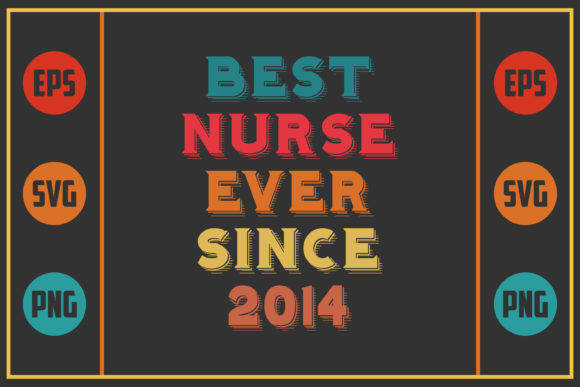
The first thing you notice about the Best Nurse Ever Since 2014 layout is its commemorative nature. It speaks to longevity and pride in the profession. From a design perspective, the typography usually dictates the success of such a piece. If the lettering is too thin, it gets lost in the fabric texture. If it is too bold, it becomes stiff. In my initial assessment, this design balances readability with aesthetic appeal, making it suitable for both sentimental personalized gift items and professional custom apparel.
The mood is celebratory yet grounded. It does not rely on overly complex illustrations that might clutter the final look. Instead, it focuses on clear communication of the milestone year. For an Etsy seller or small shop product creator, this clarity is vital. Customers scanning through listings need to instantly recognize the value proposition: a tribute to a specific career duration.
Real-World Application: The Custom Tote Bag Test
To truly understand how this Graphics asset performs, I simulated a common use case: a heavy-canvas tote bag for a nursing graduation party. Canvas is unforgiving. It has a coarse fabric texture that can swallow small details. When planning the stitch path for a project like this, the density of the design matters immensely.
If the Best Nurse Ever Since 2014 design relies heavily on fill stitch areas without proper underlay, the canvas may pucker. However, if it utilizes a mix of satin stitch for borders and lighter fill for larger areas, it sits beautifully on the surface. I found that this type of commemorative text design works best when scaled appropriately. On a tote, you want the text to be large enough to read from three feet away but not so dense that it creates a hard, cardboard-like patch on the soft fabric.
Versatility Across Product Lines
Beyond tote bags, this design has significant potential in other categories. Consider sweatshirt embroidery. Here, the loft of the fleece requires careful attention to stitch density. A design that is too dense will sink into the fleece, losing definition. Conversely, a design with too many running stitch elements might not cover the fabric adequately, leading to visibility issues. For a holiday embroidery gift or a birthday present for a colleague, this design fits seamlessly onto aprons, scrub caps, or even pillow covers for home decor.
For those creating an embroidered patch, the edges are critical. The design must have a clean border to prevent fraying after cutting. If the Best Nurse Ever Since 2014 file includes a solid backing or a defined edge, it becomes a versatile asset for iron-on applications, expanding its utility beyond direct-to-garment stitching.
Technical Considerations for Designers
Before loading this into your machine, there are several technical factors to address. Since the product description specifies a digital embroidery file delivered as a ZIP containing an SVG, we must clarify the workflow. SVGs are vector graphics, primarily used for cutting machines like Cricut or Silhouette, or for digital design in Adobe Suite. They are not native machine embroidery formats like PES or DST.
This distinction is crucial for craft business owners. If you intend to stitch this directly, you must ensure you have the correct conversion tools or that the provider includes actual embroidery formats in the package. If you are using the SVG for heat transfer vinyl (HTV) or sublimation, the process is different. Always check the file contents before promising a stitched product to a client.
Fabric and Stabilizer Choices
When working with dark fabrics, thread color contrast becomes a primary concern. White or light pastel threads pop against navy or black scrubs, which are common in the medical field. However, light threads on dark fabric require precise tension settings to avoid thread breaks. Using a high-quality cut-away stabilizer is non-negotiable for garments that will undergo frequent industrial washing, as hospital uniforms do.
For stretchy fabrics like performance scrubs, a stabilizer that moves with the fabric is essential to prevent distortion of the text. The year "2014" must remain legible and straight. Any warping here diminishes the professionalism of the finished product.
Commercial Value and Brand Consistency
For commercial embroidery projects, consistency is key. If you are branding a line of nurse appreciation gifts, the Best Nurse Ever Since 2014 design should align with your other assets. Does it match the font weights of your other designs? Does it share a similar visual language? Maintaining this consistency builds customer trust and enhances brand consistency.
From a sales perspective, this design taps into a niche market: tenure-based recognition. It is not just a generic "Nurse" shirt; it is specific. This specificity increases perceived value. A buyer is more likely to purchase a item that acknowledges their specific journey than a generic one. This drives buyer engagement and can lead to higher conversion rates for digital product sellers and handmade shop owners.
Practical Designer Notes
- Test on Scrap Fabric: Always run a test stitch on the same material you plan to use for the final product. Check for puckering and thread breaks.
- Check Thread Colors: Ensure your thread palette offers enough contrast against the fabric color, especially for medical-themed items which often come in dark blues, greens, or blacks.
- Verify File Formats: Since the download includes an SVG, confirm if you need to convert it to an embroidery format or if you are using it for cut-out applications. Do not assume it is ready-to-stitch without verification.
- Review Licensing: Before selling items made with this design, confirm the license terms. Some digital assets allow personal use only, while others permit commercial sales of finished physical goods.
- Mockup Testing: Use black and white mockups to check the legibility of the design. If it reads well in grayscale, it will likely read well in color.
In conclusion, the Best Nurse Ever Since 2014 design offers a strong foundation for meaningful embroidery project work. Its success lies in the execution: proper stabilization, careful thread selection, and an understanding of the substrate. For designers and makers who prioritize quality and detail, this asset can be a valuable addition to their library of design assets, provided the technical requirements are met with precision.