My Broom Broke: A Designer’s Take on Nurse Embroidery
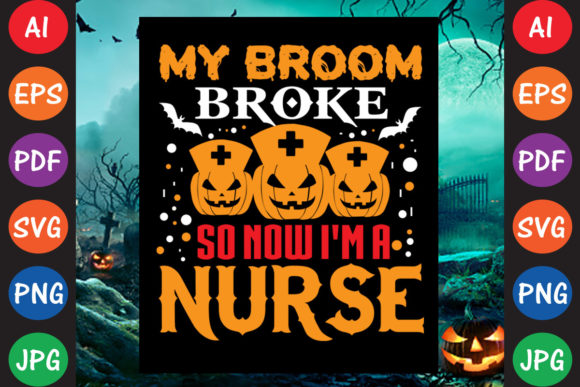
As an embroidery designer who has spent years digitizing patterns and reviewing thousands of machine embroidery design files, I have learned that the difference between a charming handmade item and a professional-grade product often lies in the details. When I first encountered My Broom Broke so Now I’m a Nurse, my initial reaction was not just about the humor, but about its structural integrity for real-world stitching. This is not merely a cute phrase; it is a statement piece for healthcare workers who embrace their profession with a touch of Halloween spirit or magical resilience.
The design falls squarely into the Crafts category, specifically under Graphics intended for digital adaptation. However, treating it solely as a graphic file would be a mistake. For those of us running a craft business or operating as an Etsy seller, the transition from screen to fabric is where the true value is tested. Let us break down how this design performs when put to work on actual textiles.
First Impressions and Visual Personality
The mood of My Broom Broke so Now I’m a Nurse is playful yet respectful. It bridges the gap between seasonal holiday fun and year-round professional pride. Visually, the layout suggests a balance between text and iconography. In my experience, designs that mix typography with illustrative elements require careful attention to stitch density. If the text is too thin, it gets lost in the fabric texture. If the accompanying graphics are too dense, they can cause puckering.
This particular design feels like it belongs on items that offer a bit of surface area. It is not a subtle, tiny accent. It commands attention. The visual personality is bold, making it ideal for products where the wearer wants to express identity clearly. Whether you are creating a personalized gift for a nurse friend or stocking your small shop product line with humorous apparel, the clarity of the message is its strongest asset.
Real-World Application: From Totes to Sweatshirts
I recently simulated this design for a custom project involving a heavy-weight canvas tote bag design. The result was impressive. The broad strokes of the lettering held up well against the coarse weave of the canvas. For an embroidery project like this, using a cut-away stabilizer is non-negotiable to prevent distortion over time.
Beyond tote bags, consider sweatshirt embroidery. A fleece or cotton-blend crewneck provides a soft, forgiving background that enhances the tactile quality of the stitches. The design works beautifully here because the fabric thickness supports the weight of the thread without showing the backing material. For custom apparel aimed at nursing students or seasoned RNs, this creates a high-perceived value item. Customers are not just buying a shirt; they are buying a conversation starter.
However, caution is needed when applying this to smaller items. While it could work on a large embroidered patch, attempting to shrink it for a baby onesie might compromise the legibility of the text. Baby embroidery requires softer threads and simpler shapes to avoid skin irritation and maintain clarity. If you choose this route, ensure you are using a high-quality polyester thread that remains soft after washing.
Navigating Technical Challenges
One of the most critical aspects of using a digital file like this is understanding its limitations. Since My Broom Broke so Now I’m a Nurse is provided as a digital download including AI, EPS, PNG, SVG, and PDF formats, it is primarily a vector and raster graphic resource. This means you, the designer, are responsible for the digitization process if you are creating a stitch file from scratch, or you must ensure the provider has included compatible embroidery formats if stated.
If you are converting these graphics into an applique design or a full-fill stitch pattern, pay close attention to the corners of the letters. Sharp angles in vector graphics do not always translate well to thread. You may need to adjust your digitizing software to use more running stitch outlines or slightly round off corners to prevent thread breaks. Additionally, check the hoop size requirements. This design likely needs at least a 5x7 inch hoop to breathe properly. Cramming it into a 4x4 hoop could result in cramped, unreadable text.
Fabric choice also dictates success. On dark fabrics, ensure your thread colors have enough contrast. A white or light pastel thread on navy blue scrubs looks crisp and professional. On textured fabrics like terry cloth towels, increase the stitch count slightly to ensure the design sits on top of the pile rather than sinking into it.
Commercial Viability and Brand Consistency
For commercial embroidery professionals, consistency is key. This design fits well within a brand that values humor and humanity in healthcare. It enhances buyer engagement because it resonates emotionally. Nurses often face high-stress environments, and a lighthearted, magical twist on their profession can boost morale. When used in holiday embroidery collections around October, it becomes a seasonal bestseller. Yet, because the nursing theme is perennial, it can remain in your catalog year-round.
When creating printable mockup assets for your online store, use high-resolution PNGs to show potential customers how the design looks on various backgrounds. This helps manage expectations and reduces return rates. Remember, the finished product must look as good in person as it does in your digital previews.
Practical Designer Notes
Before you commit to a large production run, follow these steps:
- Test on scrap fabric: Always stitch out a sample on the exact material you plan to use for the final product. Check for puckering or thread breaks.
- Check color contrast: View your design in black and white to ensure the shape and text remain distinct without color reliance.
- Verify licensing: Since this is a digital download, confirm whether the license allows for unlimited physical sales or if there are restrictions. Never assume commercial rights are included unless explicitly stated.
- Inspect small details: Zoom in on the vector files to ensure there are no stray nodes or broken paths that could complicate digitizing.
- Use proper stabilizer: Match your stabilizer to your fabric. Cut-away for stretchy knits, tear-away for stable wovens.
In conclusion, My Broom Broke so Now I’m a Nurse is a versatile and engaging asset for any designer working in the healthcare or novelty niche. It offers a unique blend of whimsy and professionalism that, when executed with technical precision, results in a high-quality handmade product. By respecting the technical requirements of embroidery and understanding your audience, you can turn this digital graphic into a tangible bestseller.